
How old-school craftsmanship restores the soul of antique New England wood
When you walk into a historic home in Bedford, Winchester, or the older Boston suburbs, you can feel the presence of the past. The original wood in these homes has a unique soul, a rich character, and a deep history that modern, mass-produced materials simply cannot replicate. Over decades of family gatherings, everyday steps, and changing seasons, these floors and staircases absorb the story of the home.
Unfortunately, when they begin to look heavily worn, scratched, or dull, many people assume their time has passed. But a lot of historic wood we see isn’t worn out—it’s just worn down. It doesn’t need to be replaced. It needs to be rescued. Preserving the authentic craftsmanship of those who built our local communities is a form of stewardship. Caring for your historic home is part of making it a place of lasting beauty, honor, and peace.
In Action: Sanding a 200-Year-Old Painted Staircase in Bedford
Recently, we had the privilege of putting these principles into practice for a client in Bedford. Upon purchasing a 200-year-old house, the new homeowners found that the home’s striking front staircase had been covered in layers of paint. They wanted to strip away the years of heavy paint and reveal the virgin historic wood underneath.
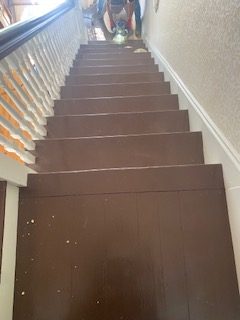
Because of the age and softness of antique wood, this is a delicate operation. If aggressive modern sanding techniques are used, you risk destroying structural integrity and sanding away the priceless wear layer. Instead, we used highly precise, patient sanding techniques, carefully stripping the paint and smoothing away the damage while ensuring the tight grain pattern and rich patina of the two-century-old wood remained fully intact.
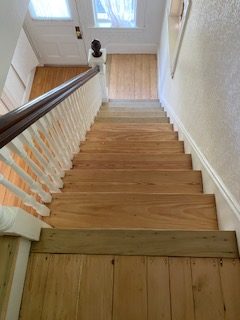
The Unique Challenge of Historic Soft Pine
Restoring historic New England soft pine—whether on a staircase or a wide-plank floor—is vastly different from working with modern hardwoods like oak or maple. Pine is naturally a much softer wood. Over a century, it becomes beautifully seasoned, but it also grows deeply sensitive to uneven wear, deep gouges, and harsh sanding. Preserving the original character requires a delicate balance. It takes a patient touch to smooth away decades of harsh damage while keeping the historic “wave” fully intact.
Why Old-School Craftsmanship Matters
With more than 40 years of experience refinishing floors across Massachusetts, I have learned that shortcuts never pay off—especially with historic properties. True craftsmanship means understanding the unique biology of aged wood. My goal is to serve local homeowners with honesty, patience, and precise skill. When we restore antique wood, we aren’t just making it look pretty for a few months. We use premium, durable finishes designed to protect against modern foot traffic, pets, and spills, effectively anchoring the wood’s historic beauty with modern longevity.
Avoiding the Trap of Blotchy Finishes
One of the biggest hurdles with aged pine is how it interacts with custom stains. Because of its varying density and century-old exposure to the elements, antique pine absorbs liquids unevenly. If you apply a stain directly without proper preparation, the result is almost always a chaotic, blotchy, and inconsistent mess. Achieving a clean, consistent, and beautiful finish requires precise custom stain testing directly on your actual floorboards before any final application. We take the time to test localized mockups, dialing in the color balance so the stain enhances the natural grain patterns rather than masking or ruining them.
Schedule Your Floor Assessment
Don’t tear out your home’s history. Trust an expert who respects old-school craftsmanship and cares about doing the job the right way. Contact Mark for an honest, no-pressure historic floor or staircase evaluation today. Let’s work together to bring your home back to life.