
Understanding how New England’s extreme seasonal humidity impacts your hardwood boards.
Gaps in your floorboards during winter or buckling in the summer aren’t always a defect—it’s the wood breathing.
For homeowners in the greater Burlington area, watching spaces open up between your beautiful hardwood planks can be alarming. You might instantly worry that your subfloor is failing or that the wood was installed incorrectly. However, because hardwood is a natural, porous material, it reacts directly to its environment. It acts like a sponge, expanding when it absorbs moisture and shrinking when that moisture disappears.
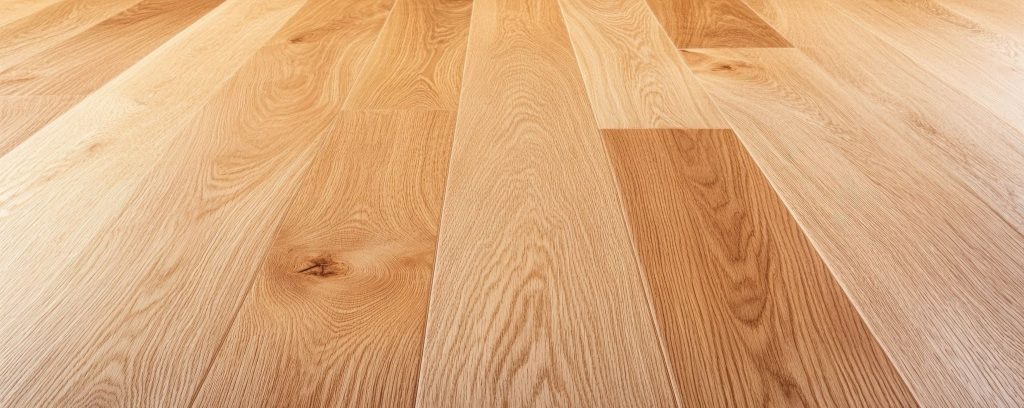
The New England Climate Yo-Yo
Our local weather swings drastically from humid summers to freezing, bone-dry winters. When your home heating system kicks on in late autumn, it strips moisture from the indoor air. In response, your floorboards release their stored water content and physically shrink. When hundreds of individual boards across a room shrink a fraction of an inch, visible gaps naturally appear.
Protecting Your Flooring Investment
While some movement is entirely natural, you can minimize severe gapping through proper indoor climate control. Safeguard your hardwood investment with these habits:
- Maintain the Sweet Spot: Keep indoor relative humidity between 35% and 55% year-round.
- Add Winter Moisture: Run a central or room-sized humidifier to prevent excessive board shrinkage.
- Control Summer Swell: Use air conditioning or dehumidifiers to pull excess moisture out during muggy July and August days.
Normal Breathing vs. Professional Repair
How do you know when a gap is normal? Seasonal gaps are typically uniform, about the thickness of a dime, and vanish completely by mid-summer. However, if gaps stay wide open all summer, look uneven, or cause boards to cup and buckle, it may point to a deeper structural or installation issue. In those situations, professional solutions such as structural stabilization, board replacement, or tight-weaving repair are required.
Unsure if your floor gaps are normal or a sign of trouble? Get an honest, no-pressure assessment from Mark today. Reach out; call or text Mark today at 781-314-7507 to schedule an in-home evaluation.